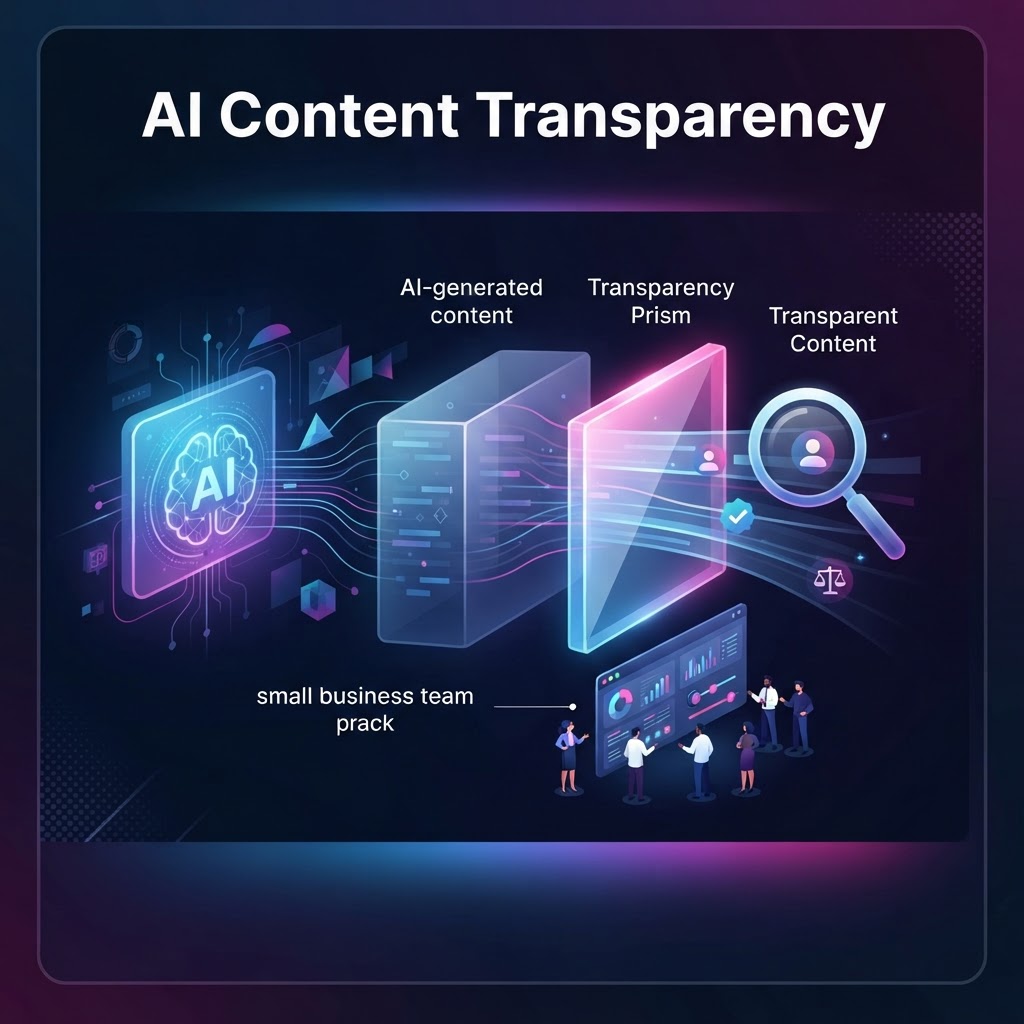
For small businesses navigating the rapidly evolving marketing landscape, understanding AI content transparency is crucial for building trust and driving effective campaigns in 2026. AI content transparency means openly acknowledging when content is generated or significantly assisted by artificial intelligence, ensuring your audience understands the origin of the information they consume. This approach fosters credibility, enhances engagement, and ultimately supports sustainable business growth by aligning with audience expectations for honesty in digital communications.
What Exactly Is AI Content Transparency?
AI content transparency is the practice of clearly disclosing when artificial intelligence has played a role in the creation or modification of marketing content. This can range from using an AI content generator to draft blog posts and social media updates to employing AI for image creation or video editing. It’s about providing clarity to your audience, so they know whether they are interacting with human-generated, AI-assisted, or fully AI-generated material. This ethical approach is becoming increasingly important as AI tools become more sophisticated and widely adopted by businesses of all sizes.
Why Should Small Businesses Care About AI Content Transparency?
Small businesses can leverage AI content transparency to build stronger relationships with their customers. In an era where consumers are increasingly savvy about digital content, honesty about AI usage can be a significant differentiator. According to a 2025 consumer trust survey by Edelman, 75% of consumers stated they are more likely to trust a brand that is transparent about its use of AI. For small businesses, this means that being upfront about AI can lead to:
- Enhanced Trust and Credibility: Openly admitting AI involvement shows integrity, making your brand more trustworthy.
- Improved Audience Engagement: When audiences know the origin of content, they can engage with it more thoughtfully.
- Stronger Brand Reputation: A commitment to transparency positions your business as ethical and forward-thinking.
- Reduced Risk of Backlash: Surprise disclosures of AI usage can lead to negative perceptions; proactive transparency avoids this.
How Can Small Businesses Implement AI Content Transparency?
Implementing AI content transparency doesn't have to be complicated. The key is to integrate clear, consistent communication into your content strategy. Here are practical steps:
1. Develop a Disclosure Policy
Create a simple, clear policy outlining how and when you will disclose AI usage. This policy should guide your content creators and marketing team. For example, you might state that content generated by your AI content creation tools will be accompanied by a small disclaimer or a clear indication in the author byline.
2. Use Clear Disclaimers
Incorporate simple disclaimers on content where AI has played a significant role. This could be a short sentence at the beginning or end of a blog post, a tag on social media updates, or a notice on AI-generated images. Examples include:
- "This article was drafted with the assistance of AI and reviewed by our editorial team."
- "Image generated using AI tools."
- "AI-assisted content."
This practice is supported by best practices in digital ethics, emphasizing the importance of clarity for consumers. When using tools like an AI post generator, a simple tag is often sufficient.
3. Train Your Team
Ensure everyone on your marketing team understands the disclosure policy and the importance of transparency. Regular training can help maintain consistency across all your marketing efforts, including AI marketing automation.
4. Be Honest About AI-Assisted Processes
If AI is used for tasks like data analysis, customer segmentation, or optimizing ad spend, consider how this impacts your audience's perception. While direct disclosure for behind-the-scenes processes might not always be necessary for the end-user, maintaining internal honesty and ethical guidelines is paramount. Tools for marketing automation software often use AI to enhance campaign performance, and understanding this usage internally is key.
When Should You Disclose AI Usage?
The level of disclosure needed often depends on the impact of the AI on the final content and the potential for audience misinterpretation. Generally, you should consider disclosing AI usage in the following scenarios:
- Substantial AI Contribution: If AI generated a significant portion of the text, visuals, or audio.
- Factual or Opinion-Based Content: When AI is used to generate articles, reports, or opinion pieces that readers might assume are solely human-authored.
- Creative Works: For AI-generated art, music, or video where the AI's role is a key aspect of the creation.
- When Building Trust: Proactively disclosing AI usage in areas where trust is paramount, like customer service chatbots or personalized recommendations, can be beneficial.
For instance, if you use an AI video generator for business to create promotional videos, a brief on-screen text or description indicating AI involvement would be appropriate. Similarly, if you utilize an AI blogging tool, a disclaimer in the author's notes or at the end of the post helps maintain transparency.
How PromoMax Can Help with Transparent AI Marketing
PromoMax is designed to empower small businesses with advanced AI marketing capabilities while prioritizing ethical usage. Our platform offers tools like an AI content generator and AI post generator that can significantly streamline your content creation process. While PromoMax automates many marketing tasks, including social media automation and automated social media posting, it does so with a focus on providing you with control and oversight. You can use our AI tools to draft content, and then your team can review, edit, and add that crucial human touch, ensuring transparency is maintained. Our goal is to provide AI tools for small businesses that are powerful, intuitive, and built on principles of responsible AI deployment.
Frequently Asked Questions About AI Content Transparency
Q1: Do I have to disclose AI usage on every piece of content?
Not necessarily. Disclosure is most important when the AI's contribution is substantial or could mislead your audience. Minor AI assistance in editing or grammar checks might not require a formal disclosure.
Q2: Will disclosing AI hurt my brand's credibility?
When done thoughtfully and honestly, disclosing AI usage can actually enhance credibility by demonstrating transparency. Consumers often appreciate brands that are upfront about their methods.
Q3: How do I disclose AI usage on social media?
Simple tags like '#AIgenerated' or a brief note in the caption (e.g., "Content assisted by AI") are effective ways to disclose AI usage on social media platforms.
Q4: Can AI content automation tools help me maintain transparency?
Yes, these tools can help by providing clear indications of AI involvement. By using them responsibly and reviewing their output, you can ensure transparency is integrated into your workflow.
Q5: What are the risks of not being transparent about AI content?
The primary risks include loss of audience trust, reputational damage, and potential backlash if consumers feel misled about the origin of content.
Related Reading
- Preventing Brand Drift in Your AI-Generated Content Workflow
- Mitigating AI Brand Drift: Maintaining Consistency at Scale
- The Impact of AI-Driven Brand Syncing on Customer Loyalty
- Automated Content Creation
- How can I use AI to create and schedule Social Media content automatically?