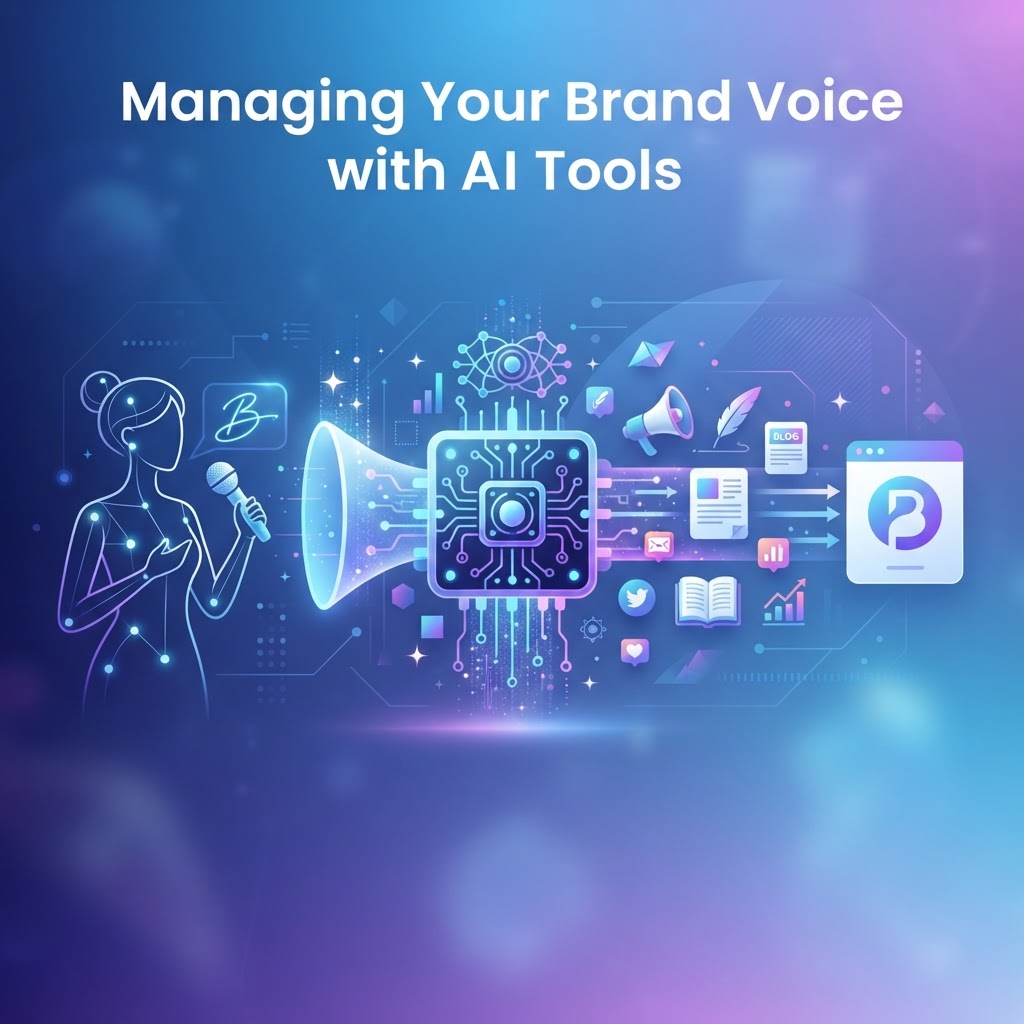
You have likely experienced the frustration of using an AI content tool only to receive output that sounds like a generic robot—bland, overly formal, or just plain weird. Maintaining brand voice with AI is one of the biggest hurdles for marketing managers. If your content sounds inconsistent, you lose trust. If it sounds like every other company using the same basic model, you lose your competitive edge.
The Core Challenge: Why AI Often Sounds Generic
Large Language Models are trained on massive datasets covering almost every writing style imaginable. Without specific instructions, they default to a middle-of-the-road, professional-but-bland tone. When you ask for 'professional' or 'engaging' without further context, the model defaults to the most statistically probable (and therefore common) output.
To fix this, you must treat your AI tools not as 'set and forget' generators, but as junior writers who need a style guide. Consistent AI marketing relies on clear boundaries and specific guardrails that define what you sound like—and, more importantly, what you never say.
Building Your Brand Voice Framework
Before you prompt your AI, you need a document that articulates your brand's personality. This isn't just about 'friendly' or 'authoritative.' It needs to be operational:
- Vocabulary lists: Identify words you love and words you strictly avoid.
- Sentence structure: Do you prefer short, punchy sentences or nuanced, descriptive prose?
- Punctuation preferences: Are you liberal with exclamation points, or do you stick to professional periods?
- Perspective: Do you speak as 'we' (the company), 'I' (the founder), or 'you' (the customer-centric guide)?
Once documented, this framework becomes the foundation of your AI prompt library, ensuring that every AI content creation project starts from the same identity.
Tactical Steps for Maintaining Brand Voice with AI
To move from generic to authentic, implement these three tactics into your workflow:
1. Use Few-Shot Prompting
Give the AI three to five examples of your best-performing, most 'on-brand' blog posts or social updates. Use a prompt like: 'Analyze the tone, sentence structure, and vocabulary used in the following examples. When writing the next piece of content, mirror this specific voice.'
2. Define 'Negative' Constraints
Sometimes it is more important to tell the AI what *not* to do. Add a 'Negative Constraint' block to your prompts: 'Do not use corporate jargon. Do not use exclamation points. Never use the word "revolutionary" or "unleash."'
3. The Human-in-the-Loop Workflow
Never bypass human review. Use AI for the heavy lifting of drafting, but reserve the final 20% for human nuance. A human should always be the one to verify that the AI marketing output aligns with your brand's emotional resonance.
How PromoMax Can Help
Scaling content without losing your identity is difficult when doing it manually. PromoMax bridges this gap by allowing you to bake your brand voice directly into your automation workflows. By leveraging our AI marketing agents, you can ensure that consistent guardrails are applied across every piece of content, from social media captions to full-length blog posts. Instead of recalibrating your voice for every task, your AI agents remember your style guide, ensuring your AI content marketing strategy remains cohesive even as your output volume increases.
Related Reading
- Essential AI Tools for Small Businesses
- Streamlining Your AI Blogging Strategy
- Marketing Without an Agency: A Guide for SMBs
Your AI Marketing Team, Working 24/7
Stop spending hours editing robotic copy. With PromoMax, you can build a scalable marketing engine that speaks exactly like your brand, every single time. Reclaim your time and maintain your identity with automation that learns your business.