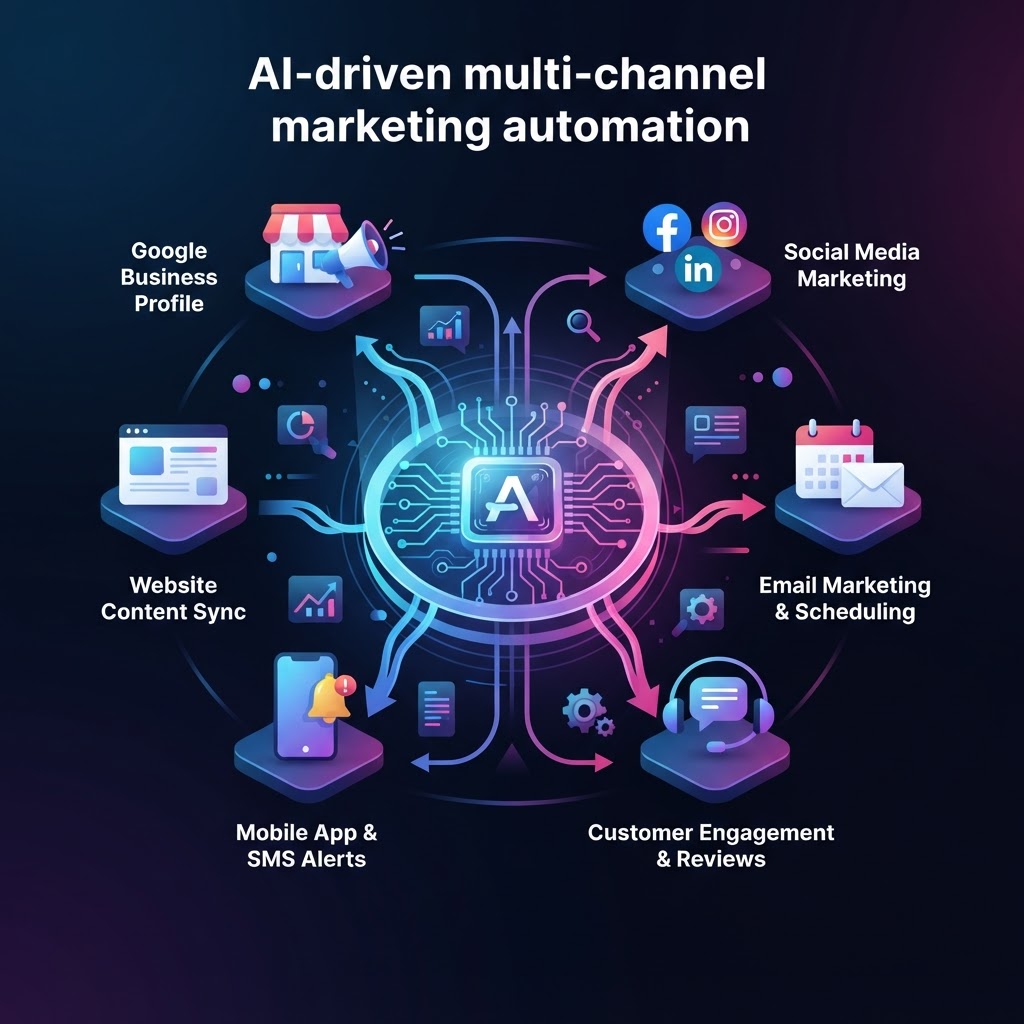
For most business owners and marketing teams, the greatest enemy of growth is the “content treadmill.” Spending 10 to 15 hours every week manually writing captions, resizing images, and logging into various platforms to hit “publish” is not just inefficient—it’s an unsustainable drain on your creative energy. Marketing automation, when implemented correctly, doesn’t mean turning your brand into a robotic, soulless feed. Instead, it means building a system that handles the heavy lifting so you can focus on strategy, engagement, and high-level growth.
Short on time? Enter your website and see what it would write for your business — free, in about 30 seconds.
1. Audit Your Content Workflows
Before you automate, you must document. Automation acts as a force multiplier; if you automate a broken process, you simply break things faster. Begin by mapping out your current weekly workflow. Identify which tasks are repetitive and rule-based. For example, creating a custom graphic for every single tweet is a manual, low-leverage task, whereas writing the core message of a campaign is high-leverage.
Action Step: Create a spreadsheet with three columns: "Task," "Frequency," and "Rule-based?" Tasks that happen weekly and follow a set format (like a “Monday Tip” or “Friday Recap”) are your primary candidates for immediate automation.
2. Choose a Unified AI-Powered Platform
The biggest mistake in marketing automation is "tool sprawl"—using one app for content creation, another for scheduling, and a third for analytics. You need a centralized hub. Look for platforms like PromoMax or similar AI-integrated suites that allow you to move from ideation to distribution in one interface.
Why AI integration matters: Modern tools can now generate first drafts based on your existing brand guidelines, repurpose a long-form blog post into ten social media captions, and suggest the optimal posting times based on your audience’s actual behavior, rather than guesswork.
3. Implement the "Content Waterfall" Method
One of the most effective ways to automate is to shift from "creating content daily" to "producing high-value assets monthly." The Content Waterfall method works by starting with one "Hero" piece of content, such as a 30-minute webinar, a long-form article, or a podcast episode.
- Step 1: Feed your Hero content into an AI tool.
- Step 2: Use AI to segment the content into 5–10 short-form clips, 3 LinkedIn posts, and a newsletter summary.
- Step 3: Schedule these outputs across your channels over the next two weeks.
By automating the repurposing phase, you ensure a consistent brand presence without having to invent new ideas every morning.
4. Automate Trigger-Based Social Engagement
Automation isn’t just about posting; it’s about responding. You can use platforms like ManyChat or Zapier to handle initial engagement. For example, if a user comments "Send me the guide" on your Instagram post, an automated flow can instantly DM them the link. This provides instant gratification for the lead and captures their interest while they are most active. You are not "botting" the conversation; you are providing a fast-tracked utility that keeps your conversion funnel moving 24/7.
5. Establish a Data-Driven Feedback Loop
Automation without analytics is blind. Once your system is running, you must set a monthly "Automation Audit." Look at the performance data provided by your platform. Which automated posts had the highest reach? Which topics fell flat?
Tactic: Don't just look at vanity metrics like "Likes." Look at click-through rates (CTR) and conversion rates. If a specific automated format is consistently underperforming, adjust your prompt settings in your AI tool or swap out the content template. By iterating every 30 days, you turn your automation system into a self-improving machine that gets smarter and more effective over time.
The Long-Term Impact
By shifting from manual posting to an automated, AI-assisted workflow, you regain roughly 40 hours of productivity every month. This isn’t just time saved; it is a competitive advantage. While your competitors are stuck resizing images and checking calendars, you can spend those hours building deeper customer relationships, refining your offer, and mapping out the next quarter’s strategy. Marketing automation doesn't replace the human touch—it clears the path for it.
Related Reading
- How to Write Prompts for AI-Driven Brand Voice
- The 80/20 Rule of Content Repurposing
- Advanced CRM Integrations for Small Business Marketing
See what it writes for YOUR business
Go to promomax.ai right now, enter your website, and get custom posts written for your business in about 30 seconds — free, no credit card. That's hundreds of posts a month on autopilot, written in your voice, published while you run your business. 7-day money-back guarantee, cancel anytime.
Get my free posts