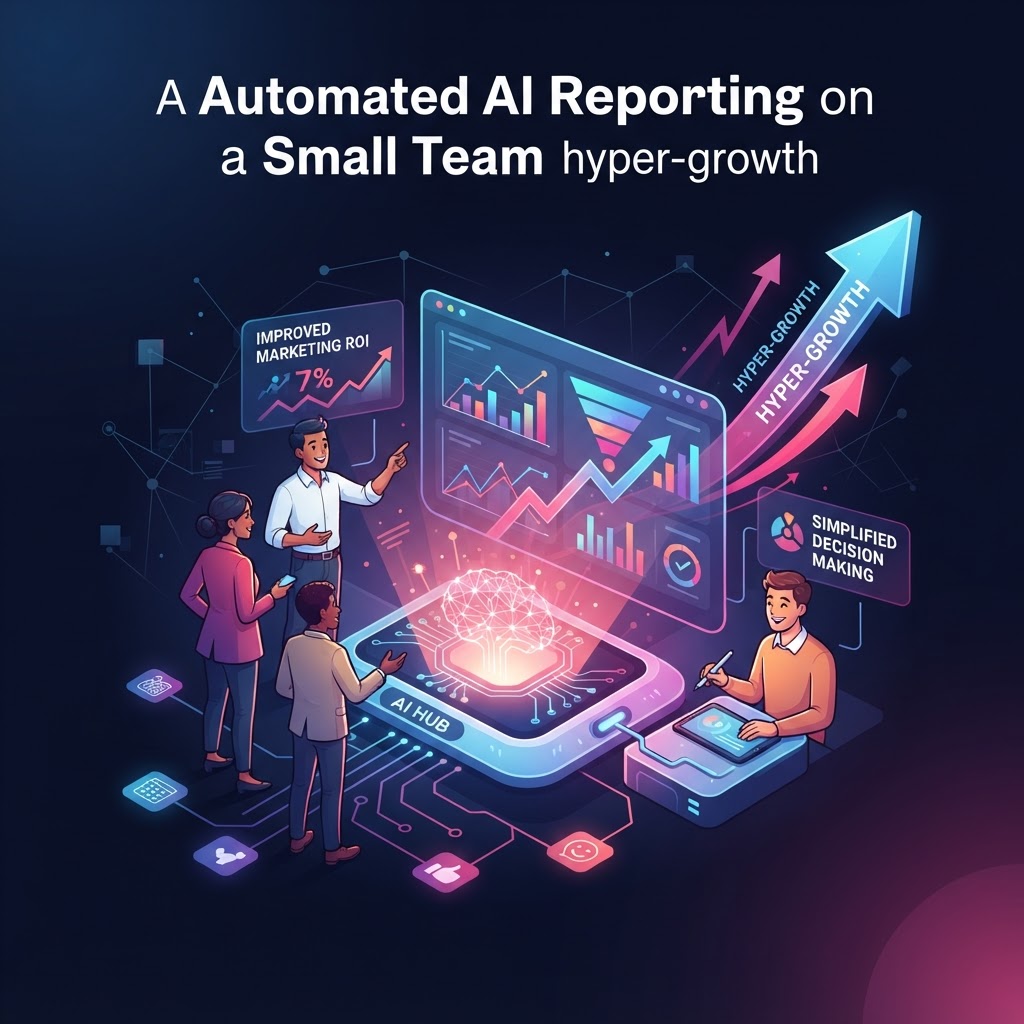
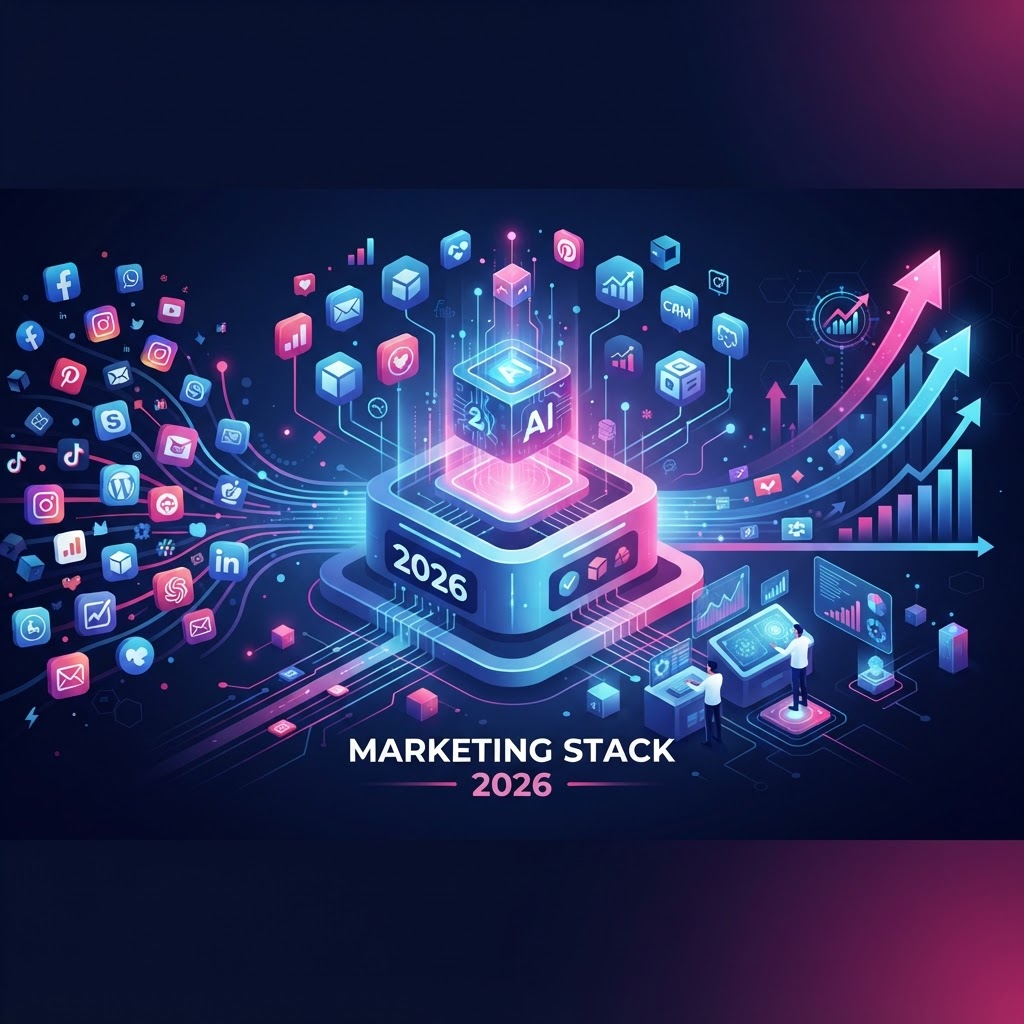
Optimizing your marketing tech stack for 2026 is no longer a luxury but a strategic necessity for your small business growth. By shifting from a collection of fragmented, single-purpose tools to a unified, AI-driven ecosystem, you will regain critical operational hours and finally eliminate the manual swivel-chair work that kills your productivity. In this guide, you will learn exactly how to streamline your operations, reduce costs, and leverage AI to build a marketing machine that works for you even when you are off the clock.
Short on time? Enter your website and see what it would write for your business — free, in about 30 seconds.
Why Is Consolidation Critical for 2026?
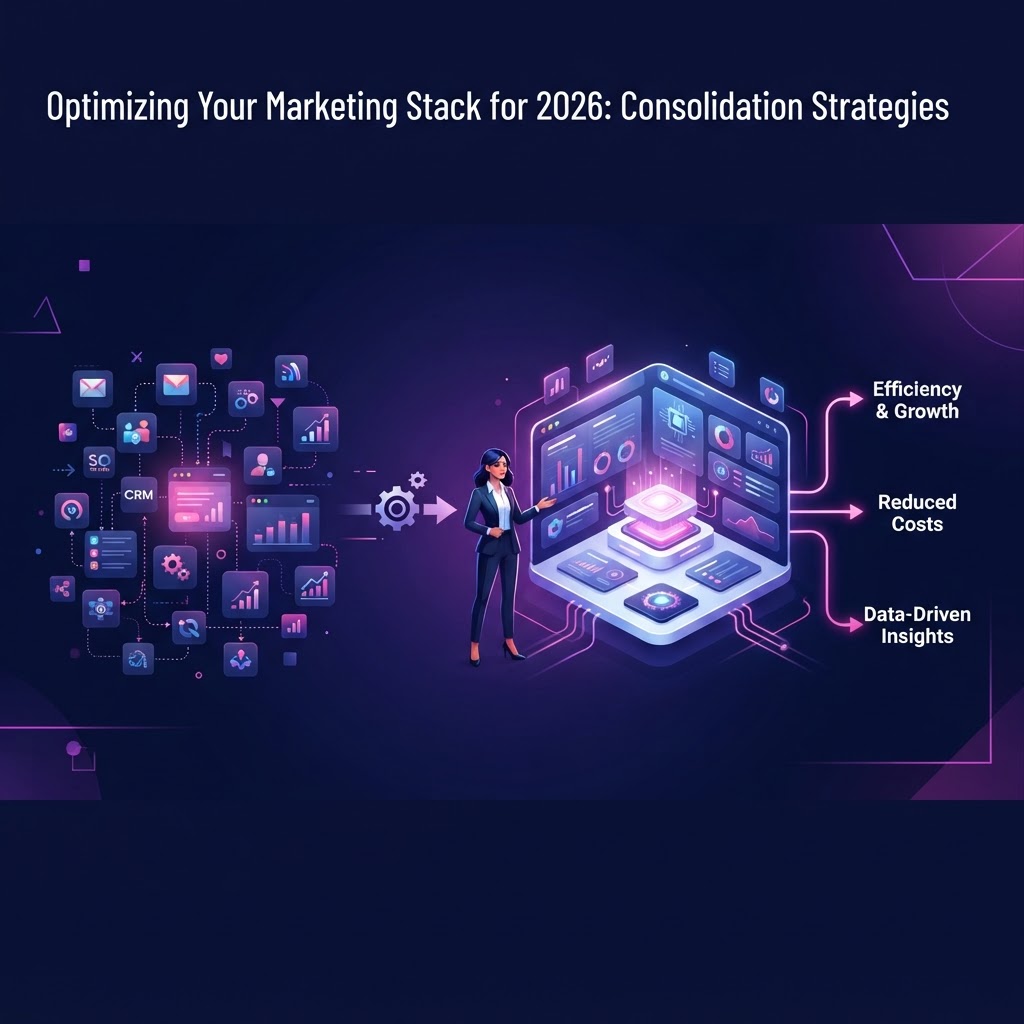
As the digital landscape becomes increasingly saturated, the overhead of managing tool sprawl is becoming a massive competitive liability for small businesses. When your data is spread across five different subscriptions, you lose the ability to see the full customer journey. Research suggests that companies struggling with fragmented ecosystems suffer from diminished data visibility, leading to bloated customer acquisition costs. By optimizing your marketing tech stack for 2026 consolidation, you turn your marketing data into a single source of truth. This allows you to stop guessing which channels convert and start doubling down on what actually drives revenue. Consolidation ensures your marketing automation efforts remain cohesive, providing a consistent brand experience across every touchpoint.
How Can You Evaluate Your Current Tools?
The first step toward a more efficient future is a brutal audit of your current software spend. Create a spreadsheet listing every subscription, its monthly cost, and the specific hours your team spends inside the tool each week. Follow this three-step evaluation process:
- Identify redundancy: Does your primary platform already offer basic scheduling or design features that you are currently paying a third party for?
- Measure friction: Count how many times you export data from one tool to import it into another. Each export represents a point of failure and lost time.
- Assess AI-readiness: If your tool cannot natively generate content or predict performance, it is legacy software that will hinder your 2026 goals.
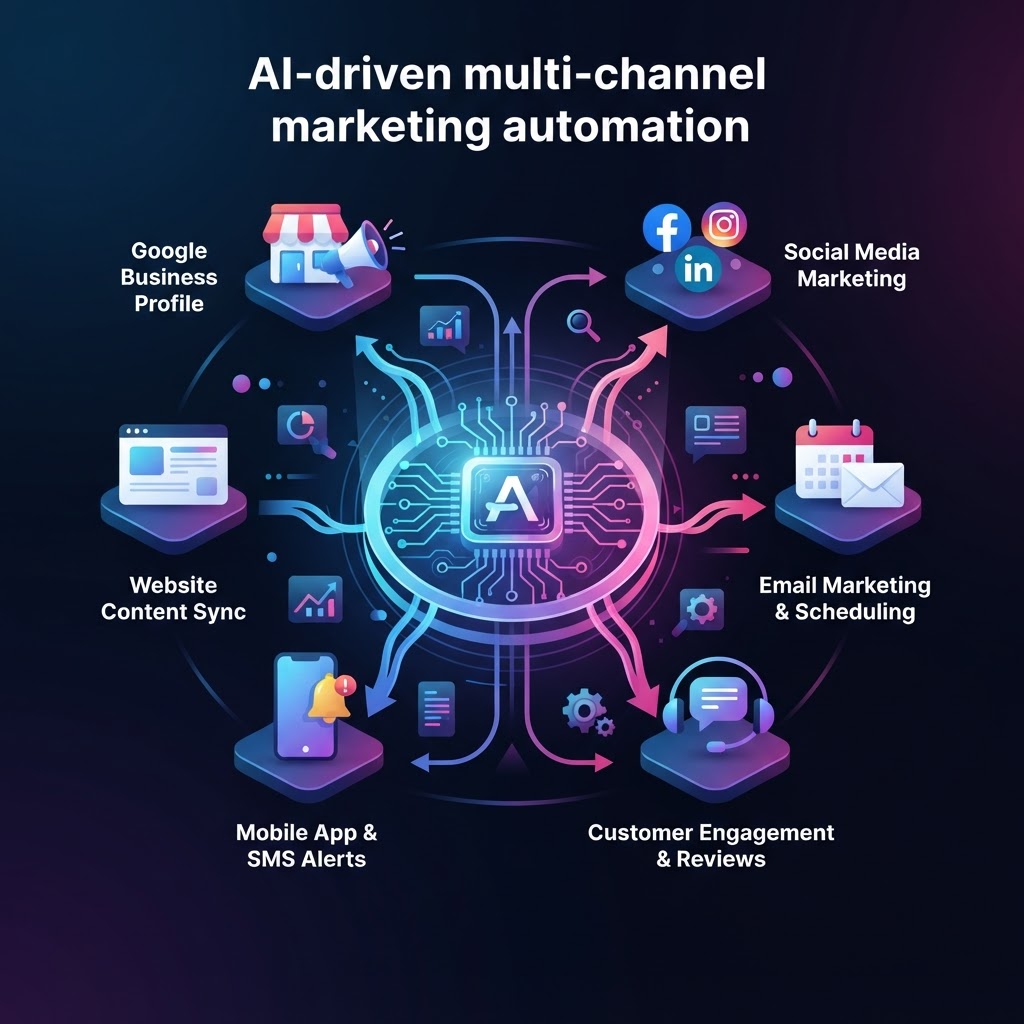
Stop paying for a separate AI content generator, a standalone social scheduler, and an entry-level design tool when you can find platforms that offer small business marketing automation as a foundational feature. The ideal stack in 2026 acts as an all-in-one AI marketing team that works in unison.
What Role Do AI Agents Play in Consolidation?
The biggest leap in technology for 2026 is the transition from passive tools to active AI agents. While a typical chatbot simply responds to prompts, modern AI agents perform multi-step execution. For instance, an AI agent can monitor your website analytics, identify a trending topic relevant to your niche, draft a blog post, and generate corresponding social media updates without you lifting a finger. By utilizing AI agents for small business, you ensure your brand voice remains consistent across all channels. This level of automated AI marketing allows owners to transition from manual task managers to high-level strategy directors.
Putting It Into Practice: A Roadmap
Do not attempt to overhaul your entire business in a single day. Instead, focus on the two most painful workflows you currently navigate. Most businesses find the greatest success by starting with their content supply chain. Use tools with AI content marketing capabilities to repurpose one master piece of content into fifteen distinct assets, such as newsletter snippets, social posts, and ad copy. By housing these assets in one unified platform, you eliminate the technical debt associated with managing login credentials and file versioning. The result is improved agility and a professional output that scales without requiring additional staff.
Frequently Asked Questions
What are the primary benefits of marketing tech consolidation?
Consolidation significantly reduces your monthly software overhead, removes data silos that obscure your ROI, and drastically cuts down on the hours wasted toggling between disconnected applications.
How does AI change the need for manual scheduling?
AI-driven platforms analyze your historical performance data to predict the optimal times for engagement. They essentially replace manual, static calendars with dynamic, self-optimizing workflows that adapt as your audience behavior shifts.
Will consolidating my stack limit my functionality?
On the contrary, modern all-in-one platforms integrate the core features that previously required five separate tools. These unified platforms often provide deeper, cross-functional insights that standalone apps simply cannot match.
When is the right time to migrate to an AI-driven stack?
The ideal time to transition is when you realize your team spends more time managing software subscriptions, troubleshooting integrations, and performing manual data exports than actually engaging with your customers.
Related Reading
- The Strategic Shift: Why Your Marketing Stack Needs AI Consolidation
- Optimizing Your Marketing Stack for 2026: Consolidation Strategies
- Why Your Business Needs AI Agents Over Static Scheduling Tools
- What are the benefits of using AI marketing automation for small business?
See what it writes for YOUR business
Go to promomax.ai right now, enter your website, and get custom posts written for your business in about 30 seconds — free, no credit card. That's hundreds of posts a month on autopilot, written in your voice, published while you run your business. 7-day money-back guarantee, cancel anytime.
Get my free posts