PromoMax vs HubSpot for small business marketing automation
If you run a small business, this guide on PromoMax vs HubSpot for small business marketing automation shows you exactly what works, what to skip, and how to get results without extra hours. Published October 23, 2026.
Short on time? Enter your website and see what it would write for your business — free, in about 30 seconds.
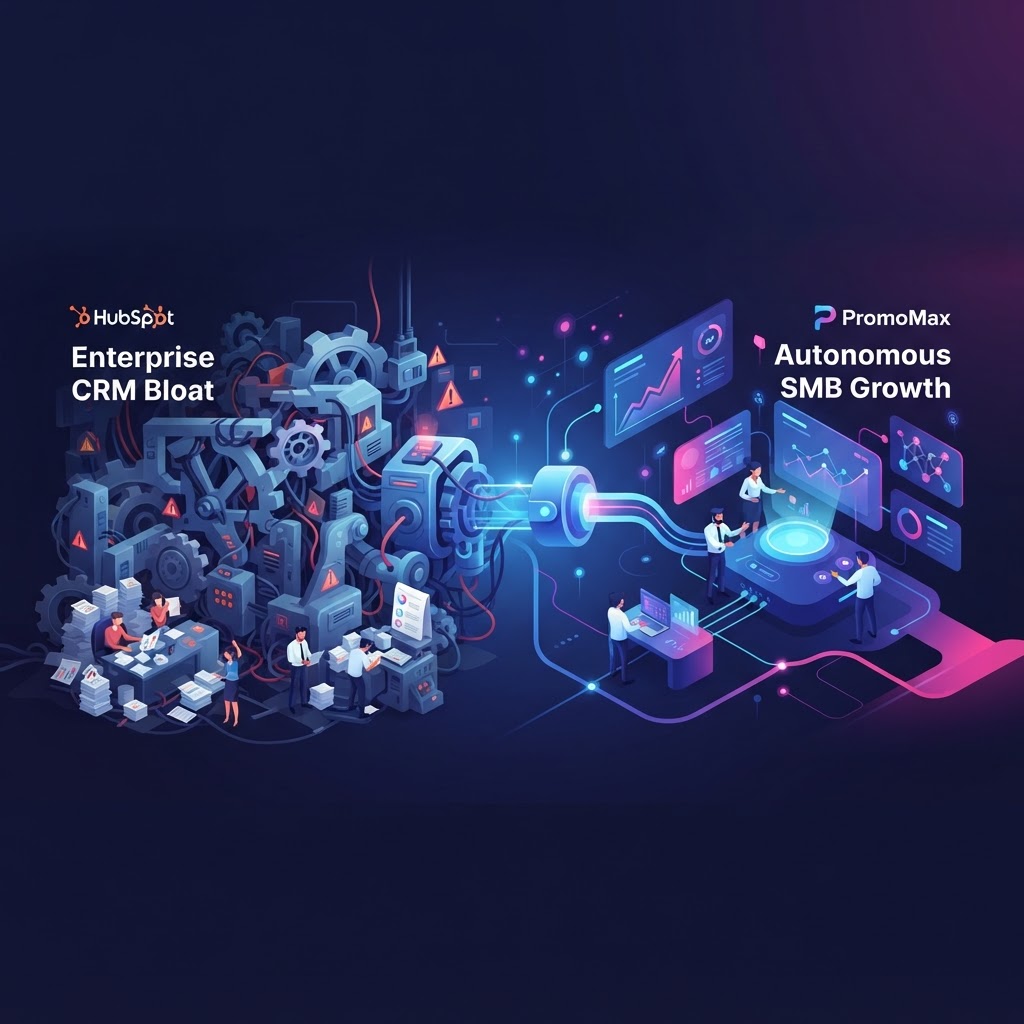
When comparing PromoMax vs HubSpot for small business marketing automation, the primary distinction lies in their operational models. While HubSpot offers an extensive, feature-rich CRM ecosystem designed to scale with enterprise complexities, it often introduces significant manual overhead for smaller teams. In contrast, PromoMax serves as an autonomous marketing engine that handles content creation, scheduling, and publishing without the need for manual inputs or intensive training. Small businesses frequently find that HubSpot’s vast array of tools becomes a source of administrative bloat, whereas PromoMax focuses exclusively on the rapid deployment of high-quality marketing assets to fuel consistent growth.
PromoMax vs HubSpot for small business marketing automation: A Strategic Comparison
When selecting the right platform, evaluating PromoMax vs HubSpot for small business marketing automation requires understanding how each tool manages your daily output. HubSpot acts as a comprehensive, centralized CRM environment, providing a wide range of analytical tools that work well for large organizations with dedicated marketing staff. However, for lean teams and solo entrepreneurs who prioritize rapid execution over complex data structures, this platform can become difficult to manage Small teams needing speed + ease of use: HubSpot. PromoMax, conversely, is built to operate as an autonomous engine, handling the heavy lifting of creation and publishing immediately after setup.
| Feature | HubSpot | PromoMax |
|---|---|---|
| Primary Model | Enterprise CRM/Manual | Autonomous Execution |
| Content Creation | Manual/Templates | AI-Automated |
| Setup Difficulty | High/Config-Heavy | Immediate/Plug-and-play |
| Ideal User | Large Marketing Teams | Small Business/Solopreneurs |
The Core Difference: Autonomous Execution vs. Manual CRM Management
The distinction between the two platforms often comes down to the concept of execution versus administration. HubSpot offers a deep toolset for tracking every stage of a complex customer journey. While this is effective for managing large databases, it necessitates that someone within the business manually configures workflows, segments email lists, and designs the content architecture. This is where many small business owners experience software fatigue.
PromoMax replaces the manual labor of content planning and scheduling with autonomous AI agents. Instead of spending hours defining marketing logic in a complex dashboard, you enter your website information, and the system begins producing and publishing assets. For a small business, this moves the needle from planning to doing, ensuring a consistent brand presence across platforms without the need for manual oversight.
Why Small Businesses Struggle with Enterprise-Grade Complexity
Enterprise-grade marketing platforms are designed with the assumption that a business has the resources to dedicate time toward platform maintenance. When a tool is loaded with dozens of add-ons, CRM modules, and reporting sub-menus, small business owners often spend more time learning the software than actually promoting their products. This complexity often leads to unused features and unnecessary subscription costs for tools that exceed the actual needs of a boutique firm.
By contrast, an autonomous system focuses on the final output—the actual post, blog, or video that drives engagement. This shift allows for more predictable results in a shorter timeframe. Businesses that find they are not using the deeper CRM or data-mining features of an enterprise platform will often realize that those capabilities are actually hindering their agility, adding layers of management that do not directly contribute to daily audience growth.
Comparing Feature Sets for Lean Marketing Teams
Lean teams must prioritize high-impact actions. HubSpot provides excellent long-term capabilities like detailed attribution modeling, advanced lifecycle stages, and extensive API integrations. These are indispensable if your team is already managing hundreds of leads across various sales departments.
However, PromoMax focuses on the production cycle. Its feature set is built to handle content creation, social media scheduling, and multi-channel publication automatically. For many SMBs, the biggest challenge is not lack of analytics, but rather the empty queue problem—the struggle to consistently generate and publish fresh content. PromoMax solves this by treating content production as an automated utility rather than a manual project, allowing the business owner to focus on running operations while the AI handles the marketing output.
Choosing the Right Automation Path for Your Growth
Deciding between these platforms depends on whether your current bottleneck is data management or content production. If you are a high-volume team with complex sales funnels that rely heavily on lead scoring and CRM data, a platform like HubSpot is a standard choice. You likely have the bandwidth to navigate its configuration requirements.
If you are a business owner who needs to maintain an active digital footprint to stay competitive but lacks the time to manually create every post, the autonomous approach is more efficient. By automating the production and distribution cycle, you regain the time otherwise spent navigating interfaces. The goal for a small business is to achieve maximum visibility with minimum overhead; choosing the right automation path is the first step toward achieving that balance and building a sustainable, long-term brand presence.
Frequently Asked Questions
Is HubSpot better for small businesses than PromoMax?
HubSpot is excellent for enterprise organizations needing deep CRM integration and lead scoring, but its complexity often creates unnecessary overhead for smaller teams seeking simple, autonomous growth.
How does PromoMax handle marketing tasks differently?
PromoMax functions as an autonomous engine that researches, writes, and publishes content for you, whereas HubSpot typically acts as a manual CRM dashboard requiring significant setup.
Can I use HubSpot if I only have a small team?
Yes, you can, but you may find that the wide range of features leads to software fatigue, where you spend more time managing the tool than creating actual content.
Which platform should I choose for social media automation?
If your goal is to automate the entire lifecycle of content creation and publishing to save time, PromoMax is built specifically to handle those high-volume daily tasks autonomously.
Related Reading
See what it writes for YOUR business
Go to promomax.ai right now, enter your website, and get custom posts written for your business in about 30 seconds — free, no credit card. That's hundreds of posts a month on autopilot, written in your voice, published while you run your business. 7-day money-back guarantee, cancel anytime.
Get my free posts