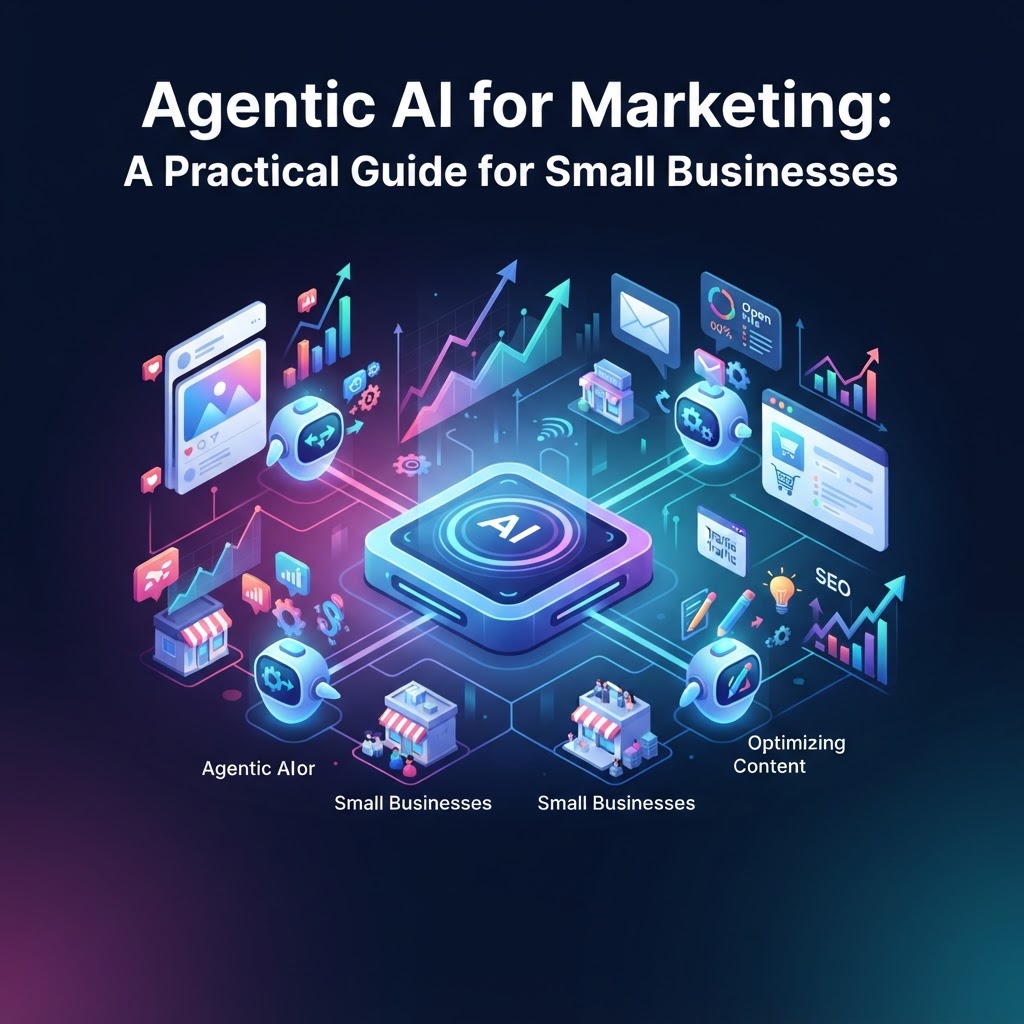
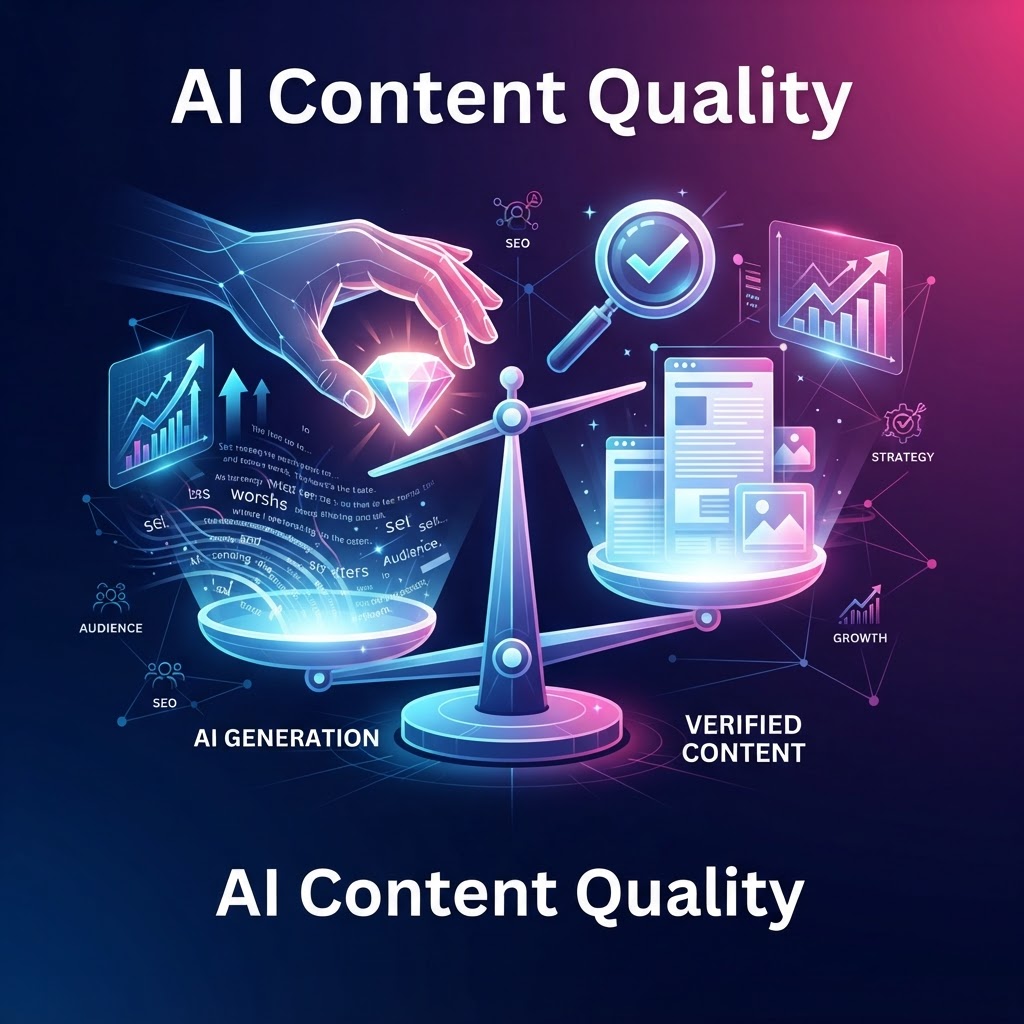
In an era where digital noise is at an all-time high, your ability to leverage AI content quality defines whether your small business thrives or fades into the background. You will learn exactly how to transform generic, machine-generated text into a high-converting asset that strengthens your customer relationships and builds lasting authority.
Short on time? Enter your website and see how PromoMax would write for your business — free, in about 30 seconds.
The Core Pillars of AI Content Quality
AI content quality is no longer just about avoiding grammatical errors; it is defined by accuracy, deep brand alignment, and the tangible ability to drive business outcomes. Generic, surface-level articles may populate your site, but they rarely solve the complex problems your customers face. For a small business, quality means producing material that positions you as the clear leader in your niche.
To succeed in 2026, you must pivot away from mass-producing mediocre text and focus on content that reflects your proprietary expertise. True quality manifests when your unique insights act as the framework for AI assistance.
Applying E-E-A-T to Automated Outputs
Google’s Search Quality Rater Guidelines emphasize E-E-A-T: Experience, Expertise, Authoritativeness, and Trustworthiness. When utilizing AI content creation, these factors are often the first to suffer. The most common mistakes include:
- Hallucinations: The AI presents false claims as fact, damaging your trustworthiness.
- Vagueness: The content lacks specific examples, industry data, or real-world application.
- Repetition: The tool cycles through the same three points, failing to provide new value.
High-quality AI outputs require a human tether. By feeding the model your internal case studies, white papers, and historical performance data, you move from generating filler to creating high-value assets grounded in reality.
Maintaining Your Signature Brand Voice
One of the greatest dangers of using automated tools is the homogenization of brand identity. If your business sounds like every other generic website, you lose the competitive advantage of your personal touch. To maintain a consistent voice, you must treat your AI marketing agents like junior copywriters who need clear, written instructions.
- The Style Inventory: Before generating a single post, compile a style guide that includes your preferred vocabulary, forbidden buzzwords, and specific sentence structures.
- Example-Based Training: Feed the tool three of your best-performing blog posts. Explicitly instruct the model to adopt the tone, pacing, and emotional intelligence found in these examples.
- The Review Protocol: Establish a strict check to ensure that the machine-generated personality doesn’t drift into overly formal or overly casual territory that doesn't fit your brand identity.
Prioritizing Strategic Context Over Speed
While the velocity of AI is seductive, speed is irrelevant if your content fails to convert visitors into customers. Effective AI content marketing requires a strategy where every piece of output is mapped to a specific stage of your sales funnel. Instead of asking for a generic post, provide high-context prompts:
- Awareness Stage: Ask the AI to write a listicle focusing on the top five pain points your target demographic faces, avoiding sales pitches entirely.
- Consideration Stage: Task the AI with comparing your specific methodology against common industry alternatives, highlighting why your unique value proposition matters.
- Decision Stage: Request a piece that directly addresses common customer objections and provides social proof.
Implementing a Human-in-the-Loop Workflow
To consistently reach high AI content quality, you must implement a rigorous editorial workflow that prevents automated errors from reaching your audience. First, perform a quarterly audit of your content library to see which topics resonate with your audience and discard those that consistently underperform. Second, always use constraints in your prompts, such as, "Write in a conversational tone that avoids passive voice and includes a clear, actionable CTA at the end." Finally, the most important step is the human editorial filter. Before publishing, verify every data point and ensure the emotional resonance matches your intended brand promise. Even the most sophisticated tools cannot replace the nuance, empathy, and strategic thinking that only you bring to your business.
Related Reading
- Preventing Brand Drift in Your AI-Generated Content Workflow
- Mitigating AI Brand Drift: Maintaining Consistency at Scale
- The ROI of Switching to AI-Powered Marketing Automation
See what it writes for YOUR business
Go to promomax.ai right now, enter your website, and get custom posts written for your business in about 30 seconds — free, no credit card. That's hundreds of posts a month on autopilot, written in your voice, published while you run your business. 7-day money-back guarantee, cancel anytime.
Get my free posts