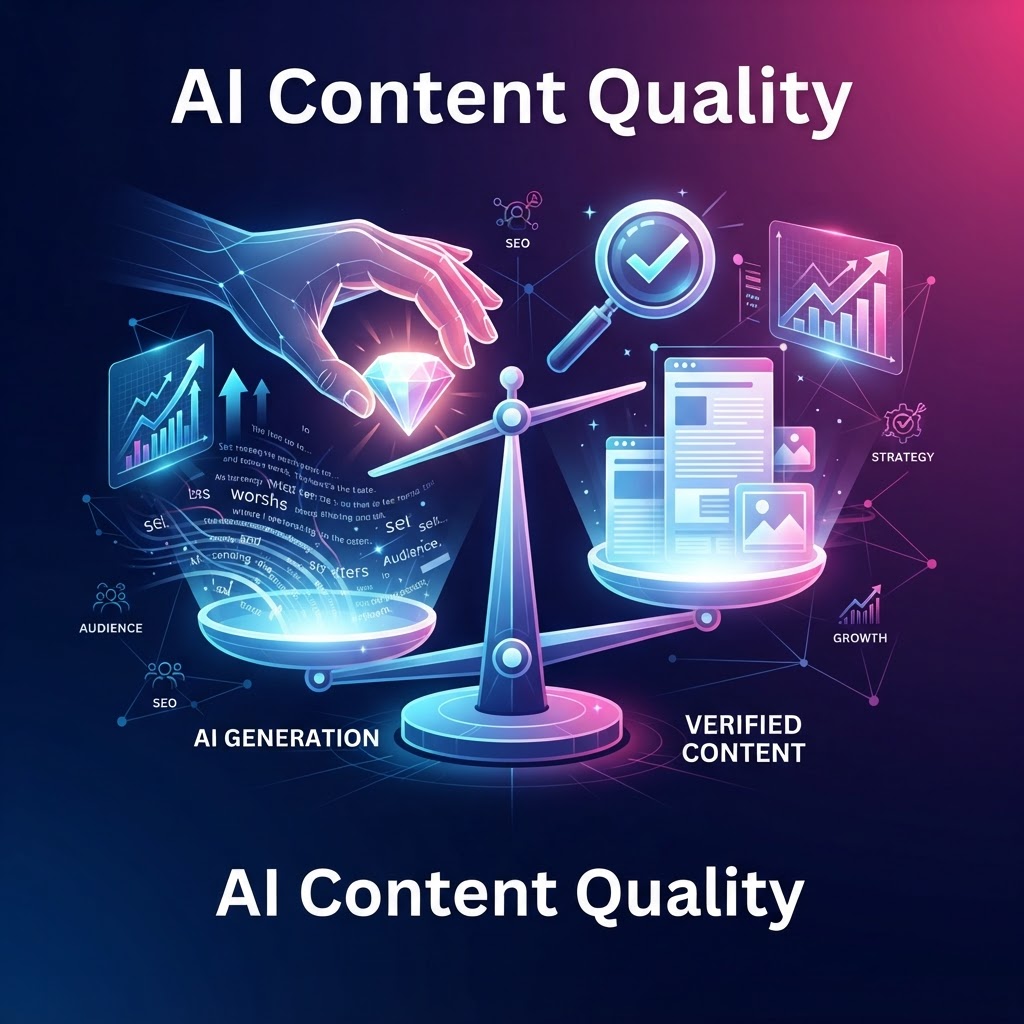

You are likely noticing that the landscape of online search is shifting beneath your feet as AI-powered platforms change how your customers find answers. By mastering AI Search Optimization (GEO), you will learn how to position your business as the definitive source that AI agents choose to cite, ensuring your brand stays visible in this new era. This guide provides actionable steps to align your digital presence with the requirements of modern AI models.
Short on time? Enter your website and see what it would write for your business — free, in about 30 seconds.
Understanding the Fundamental Shift to GEO
Traditional SEO was built for a world of blue links and keywords. It focused on gaming the algorithm to secure a high ranking so users would click your site. AI Search Optimization (GEO) flips this model by prioritizing information retrieval and synthesis. When a user asks a question like, 'What is the best local plumber in Austin?', they are not looking for a list of ten websites. They want one authoritative answer generated instantly by an AI.
The goal of GEO is to become the cited source in the generated response. AI models function by scanning vast datasets to extract truths, facts, and expert opinions. If your content is ambiguous, keyword-stuffed, or poorly structured, the AI will likely skip your site in favor of a competitor that offers a clean, concise, and verified response.
The Pillars of AI Search Optimization
To win in an AI-first search landscape, you must focus on four key areas: semantic clarity, high-value data, structural organization, and authority. AI engines favor content that behaves like a reference manual. Use direct, objective language to answer questions, as AI models favor content that can be easily parsed for 'snippets.' Incorporating AI content creation tools can help you maintain the consistency required to be consistently indexed by these engines.
- Semantic Clarity: Remove jargon and flowery intros. If you are a landscape company, don't write about the 'philosophy of gardening.' Instead, write, 'The best grass seed for shaded areas in Zone 7 is Fine Fescue.'
- Structural Organization: Use H2 and H3 tags effectively. AI crawlers use your subheadings to determine the scope of your content.
- High-Value Data: Include tables, pricing charts, and bulleted lists. AI models find structured data easier to parse than long paragraphs.
- Authoritative Backing: Cite your sources and maintain an 'About Us' page that clearly details your credentials and years of experience.
Optimizing Content Formats for AI Engines
AI engines specifically look for clear definitions, comparisons, and listicles because these formats represent high-density information. If a user asks 'How do I automate my marketing?', the AI looks for a step-by-step breakdown. By utilizing AI blogging strategies, you can produce content that answers these specific queries. Always pair your content with schema markup, which is the secret language that tells search engines exactly what your business is, where you are located, and how much your services cost.
Common mistake: Many small businesses try to hide the answer to a question behind a long narrative hook. This is a mistake in a GEO world. Place the direct answer in the first two sentences of your blog post or page. If you are writing about your pricing, create a dedicated table that highlights your service packages clearly.
Practical Steps to Execute Your GEO Strategy
Small businesses should start by auditing their current web content for 'question-answer' pairings. Identify the top 10 questions your customers ask during sales calls and create dedicated pages or blog posts that explicitly state the answer in the first two sentences. Use AI marketing for small business tactics to distribute this content across your channels, ensuring that your expertise is visible to both humans and AI crawlers.
Start by auditing your existing pages. If you have a 'FAQ' section, expand it. Turn every single question into a standalone article or a highly detailed expandable section. Use internal linking to connect these answers to your primary service pages, creating a web of expertise that AI models will view as an authoritative knowledge base.
Frequently Asked Questions
What is the main difference between SEO and GEO?
SEO focuses on driving traffic to your website via blue-link rankings, while GEO focuses on being the direct source used by an AI to answer a user's question within the chat interface.
Do I need to stop doing traditional SEO?
No. Traditional SEO remains critical for brand building and traffic, but you should shift your content strategy to include more 'answer-focused' writing that satisfies both AI models and human readers.
How do I know if an AI is using my content?
While direct reporting is still evolving, monitor your brand mentions and referral traffic from AI platforms. High-quality content that provides clear, actionable answers is more likely to be cited as a source.
Can I automate GEO?
Yes. By using automated AI marketing platforms, you can ensure your site is constantly updated with relevant, high-quality content that is structured for AI readability.
Related Reading
- The Impact of Zero-Click SEO on Small Business Content Discovery
- The ROI of Switching to AI-Powered Marketing Automation
See what it writes for YOUR business
Go to promomax.ai right now, enter your website, and get custom posts written for your business in about 30 seconds — free, no credit card. That's hundreds of posts a month on autopilot, written in your voice, published while you run your business. 7-day money-back guarantee, cancel anytime.
Get my free posts