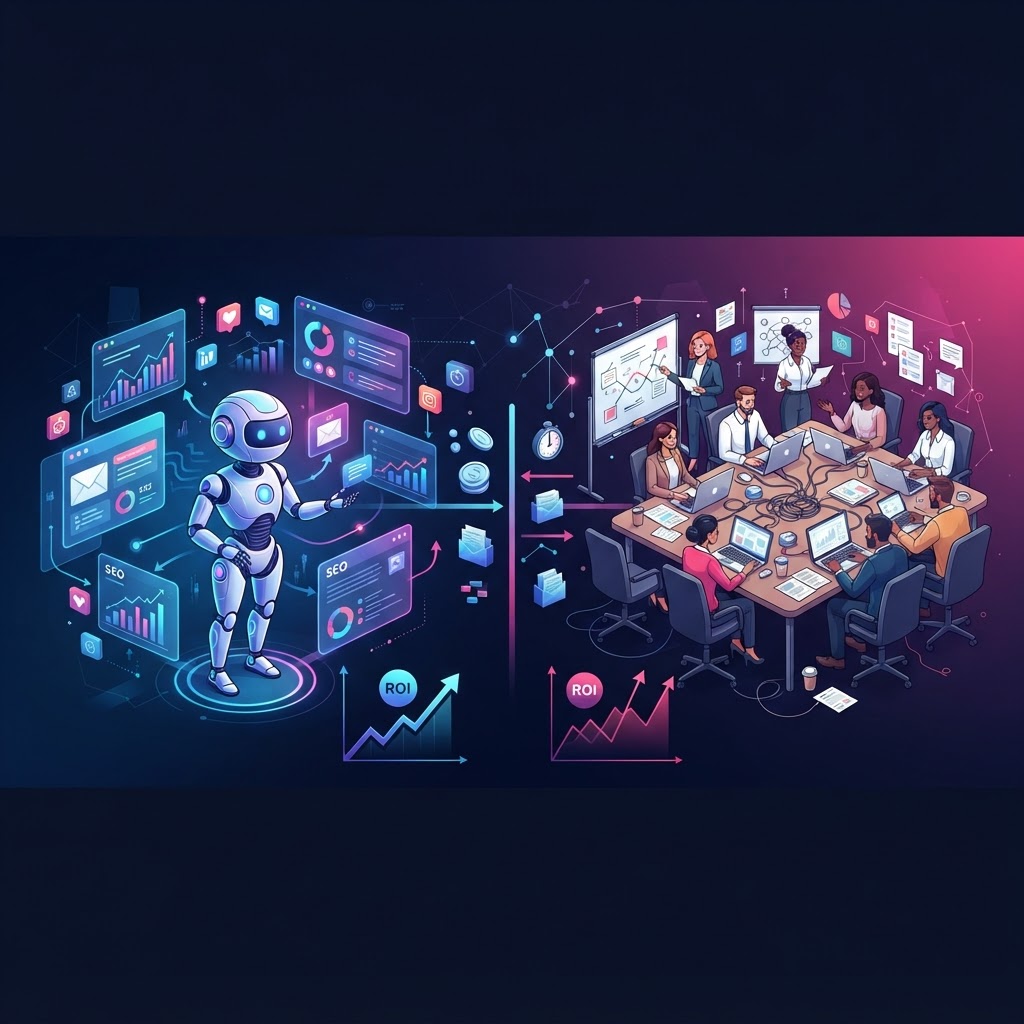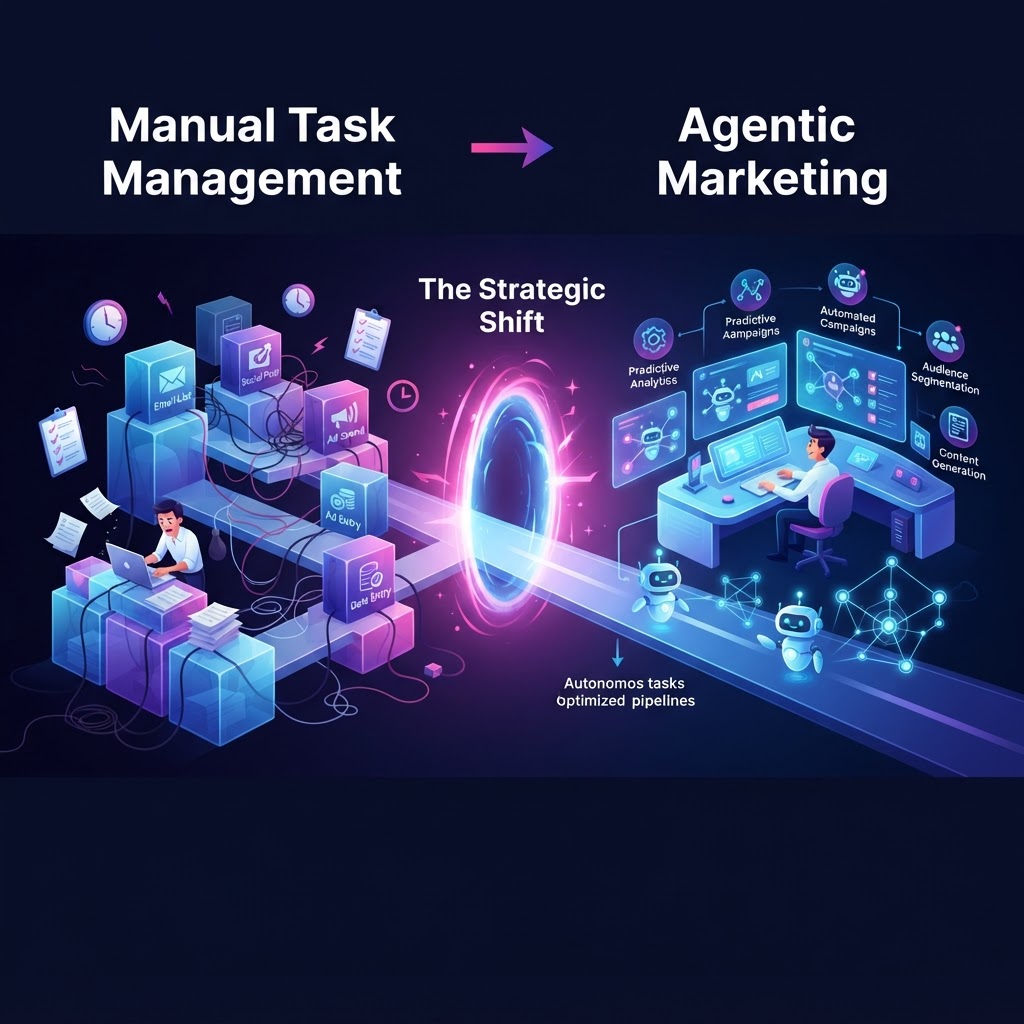
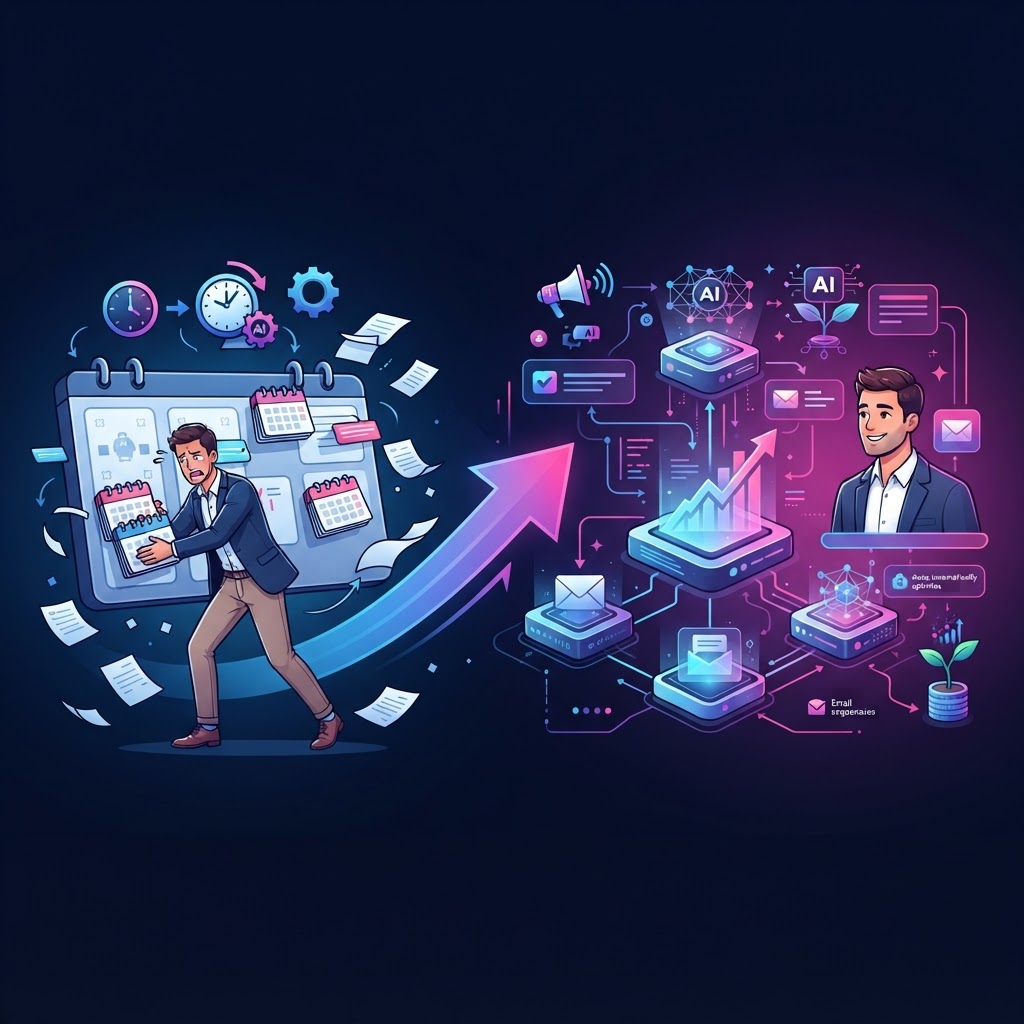
Transitioning from manual scheduling to AI marketing agents is the pivotal step you must take when your business outgrows the capacity to react in real-time to market fluctuations and customer feedback. By moving away from rigid, manual calendars, you will regain hours of lost productivity and replace guesswork with data-backed, autonomous decision-making that scales with your ambition.
Short on time? Enter your website and see what it would write for your business — free, in about 30 seconds.
The Hidden Costs of Manual Scheduling
Manual scheduling relies on a static, set-it-and-forget-it mindset that creates a dangerous bottleneck in your growth. When you manually plug content into a calendar, you are treating marketing as a binary task rather than a fluid conversation. This approach causes several specific issues:
- Content Stagnation: You publish based on your schedule, not your audience’s peak activity times.
- Opportunity Cost: Spending more than 20% of your week on formatting and scheduling means you have 20% less time for high-level strategy, product development, or customer service.
- Analytical Blind Spots: Manual systems make it difficult to pivot quickly when a specific post type outperforms others, as you are locked into a queue you built weeks ago.
Signs You Are Ready for an Intelligent Upgrade
Recognizing the need for a shift requires an honest look at your current output. If your content performance has reached a plateau despite your consistent effort, your manual workflow is likely the culprit. You need the agility that comes with transitioning from manual scheduling to AI marketing agents. Watch for these three warning signs:
1. The Formatting Trap
If you find that 70% of your time is spent adjusting font sizes, cropping images, or copy-pasting captions into various platforms, you are misallocating your human capital. AI agents can handle these repetitive, low-value tasks with precision, allowing you to focus on the message rather than the medium.
2. Lack of Cross-Channel Cohesion
Maintaining a consistent brand voice across LinkedIn, Instagram, and Twitter is mentally exhausting. When you use AI agents for marketing, they act as the connective tissue, ensuring your messaging remains uniform while adapting the delivery to the specific nuances of each platform.
3. The Inability to Pivot
If a sudden industry trend emerges, can you capitalize on it within an hour? If your manual calendar is full for the next two weeks, you effectively lose the ability to participate in timely conversations. Agentic workflows provide the flexibility to inject new content into your feed without manually rescheduling your entire pipeline.
How Agentic Workflows Differ from Standard Automation
Standard automation is binary and rigid. It operates on simple triggers, like 'at 9:00 AM, post this image.' In contrast, an AI agent is iterative and context-aware. It acts as an extension of your team by evaluating the success of previous posts before determining the parameters for the next one.
For those interested in AI marketing for small business, this shift represents a transition from a 'task-execution' role to 'strategic oversight.' The agent reviews historical engagement, analyzes click-through rates, and suggests adjustments to timing or tone, effectively turning your marketing into a self-optimizing loop.
Practical Steps to Transition Your Strategy
You do not need to overhaul your entire business model overnight. Instead, implement a phased transition to maintain operational stability while integrating more sophisticated tools.
- Audit and Identify: Track your time for one week. Isolate the tasks that require zero creative input, such as resizing assets or standardizing post captions.
- Deploy Initial AI Support: Use a specialized AI content generator to handle the heavy lifting of drafting first versions of your posts. This removes the dreaded blank page syndrome.
- Integrate Performance Loops: Connect your scheduling tools to your analytics data. This is the foundation of automated digital marketing, where your AI agent begins to suggest posting times based on when your specific audience is actually online, rather than using generic best-practice charts.
By prioritizing adaptive intelligence over static scheduling, you move your business into a position of proactive growth rather than reactive maintenance.
Related Reading
- The Rise of Autonomous Marketing: How AI Agents Manage Day-to-Day Operations
- What are the benefits of using AI marketing automation for small business?
- PromoMax vs Buffer: Replacing Manual Scheduling with Full Lifecycle Automation
See what it writes for YOUR business
Go to promomax.ai right now, enter your website, and get custom posts written for your business in about 30 seconds — free, no credit card. That's hundreds of posts a month on autopilot, written in your voice, published while you run your business. 7-day money-back guarantee, cancel anytime.
Get my free posts