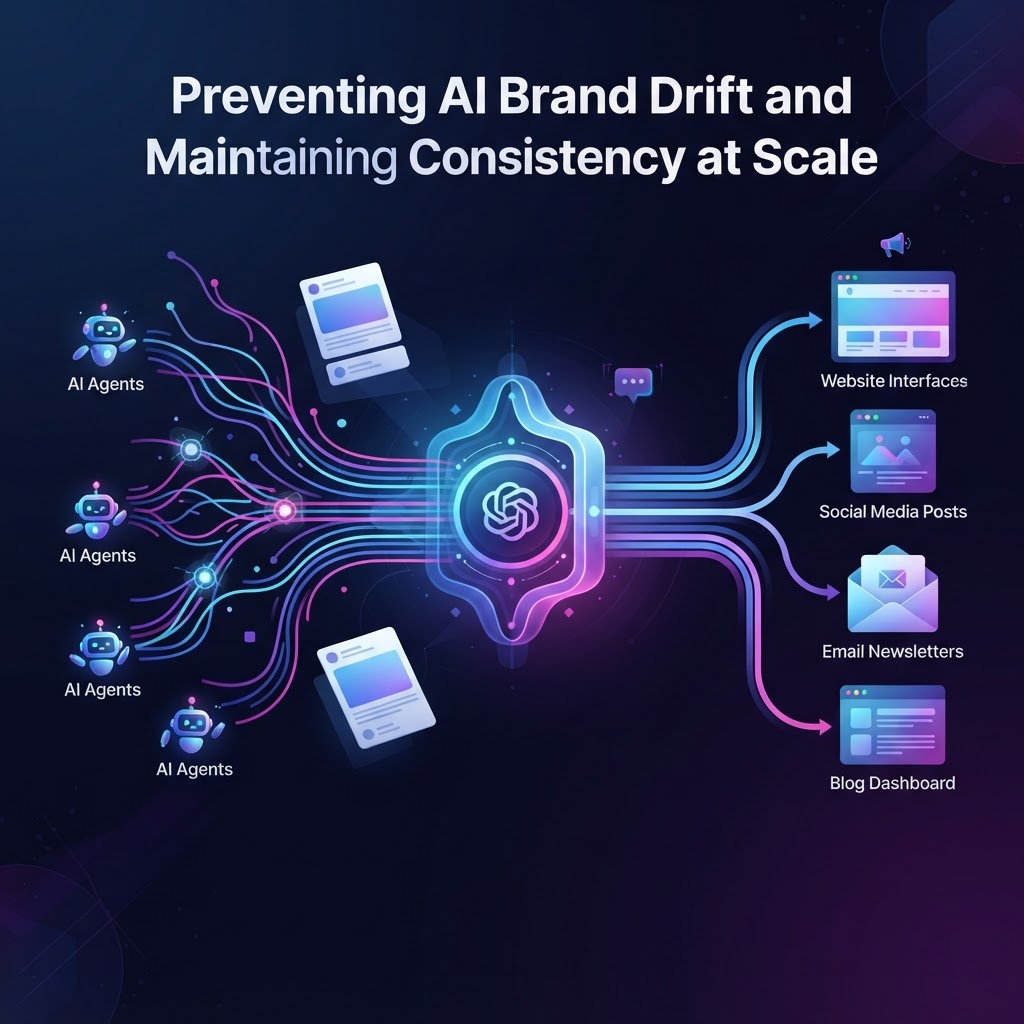

You are likely struggling to maintain your brand voice as AI-generated content begins to sound identical across your digital platforms. By mitigating AI output fatigue through dynamic content refreshing, you will reclaim your audience's attention and ensure your brand remains a distinctive authority in your niche rather than a generic echo chamber.
Short on time? Enter your website and see what it would write for your business — free, in about 30 seconds.
Why Does AI Output Feel Repetitive Over Time?
AI models function as probability engines that gravitate toward the most statistically likely sequence of words. When you repeatedly use the same prompt structure, you inadvertently train the model to retreat into a safe and predictable stylistic box. This leads to the phenomenon of reader fatigue, where your audience subconsciously learns to gloss over your headlines because they recognize the cadence of an automated generator. Content marketing consistency is a virtue, but when that consistency crosses into predictability, engagement drops sharply. If every post begins with an obvious hook followed by a standard listicle format, your readers stop seeing a human expert and start seeing a software output.
How Can You Introduce Dynamic Variables Into Your Workflow?
To move beyond the cycle of bland content, you must shift from static instructions to a variable-based prompting framework. Consider these three steps to force your AI content generator to perform outside its comfort zone:
- The Context Injection Method: Instead of asking for a generic article, feed the model three specific pieces of recent data, such as a direct question from a client, a recent shift in your local regulatory environment, or a specific internal company milestone.
- Constraint-Based Prompting: Explicitly forbid the use of common AI tropes. Tell the model not to use words like "unleash," "unlock," or "game-changer." When you strip away the filler, the substance of your message is forced to carry the weight.
- Building a Living Context Library: Create a document that contains your brand's unique history, successful case studies, and internal values. Copy and paste segments of this into your prompt each time to ensure the model has a grounded reference point.
What Are the Best Dynamic Content Strategies to Keep Audiences Engaged?
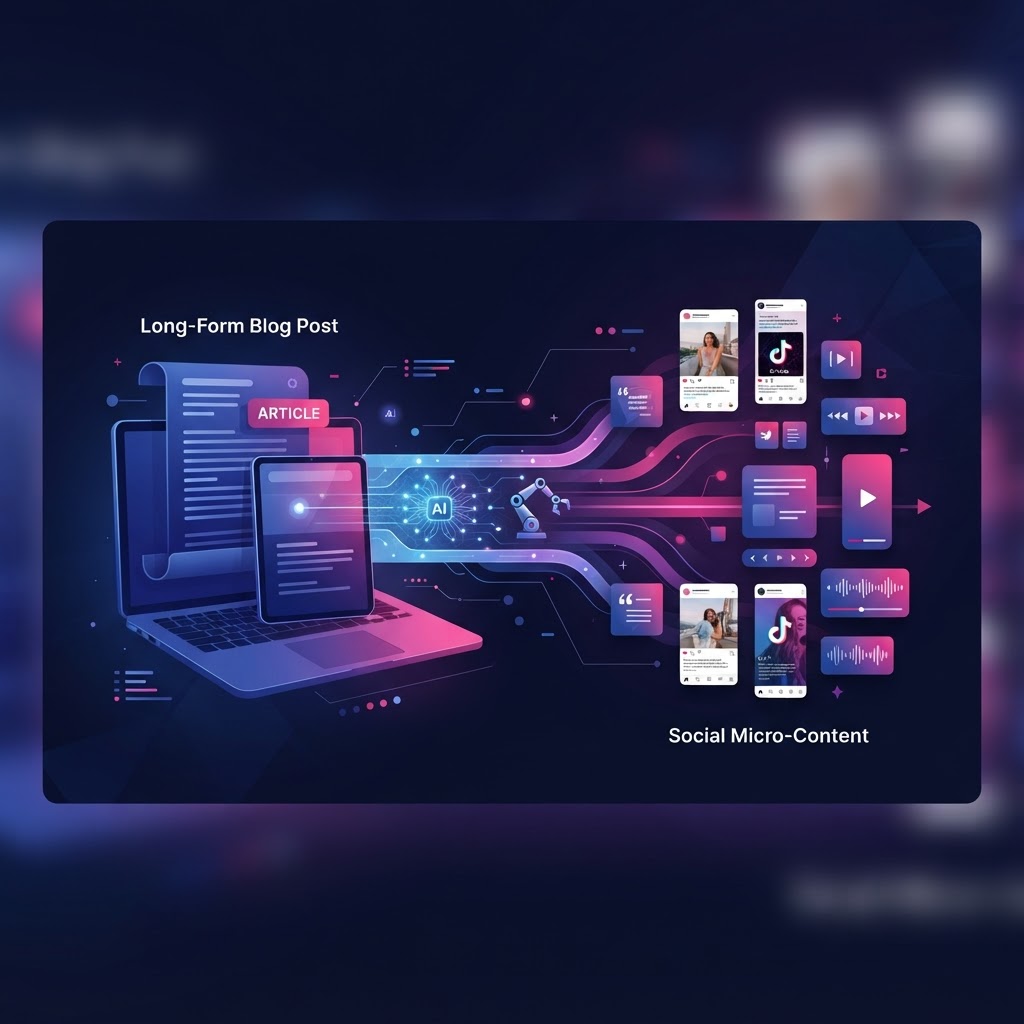
Mitigating AI output fatigue through dynamic content refreshing requires a transition toward modularity. Rather than relying on long-form blog posts that follow a rigid structure, break your output into varied formats.
Diversify Your Formats
Use your tools to generate rapid-fire tips, micro-polls for social media, or short-form video scripts. When you force the model to write for a 15-second TikTok script versus an 800-word deep dive, it is forced to use different syntactical structures, effectively preventing the repetition that breeds boredom.
The Role of Auditing Agents
Leverage AI marketing agents tasked specifically with structural auditing. By feeding these agents your content from the previous month, they can identify recurring sentence lengths, predictable transition phrases, and overused adjectives. Use these insights to build a mandatory rotation system where you swap your persona from "The Empathetic Peer" to "The Data-Driven Analyst" depending on the goal of the piece.
Common Mistakes in Scaling AI Content
Many business owners make the mistake of assuming that more volume equals better SEO results. In reality, pumping out high volumes of stale content can trigger negative signals with your audience. Avoid these errors:
- Ignoring the Human-in-the-Loop: Never publish raw output. You must provide the final polish that reflects your personal perspective.
- Over-optimizing for Keywords: Focus on solving the reader's problem rather than stuffing terms into a prompt for an AI post generator.
- Using Static Templates: If you use the same prompt template for every post, you are essentially creating a template for fatigue. Update your prompt library every 30 days.
Putting It Into Practice: Achieving Human Resonance
To successfully integrate these strategies, begin by creating a formalized style sheet that clearly defines the boundaries of your brand voice. When you use AI content creation methods, focus on injecting the "why" behind your business decisions. While an AI can explain "how" to perform a task, it cannot naturally replicate the personal history or the specific emotional stakes you have in your business. By infusing your authentic, subjective viewpoint into the output, you turn a machine-generated draft into a piece of human-led strategy that keeps your readers coming back for more.
Related Reading
- Preventing AI Output Fatigue: Strategies for Dynamic Content Refreshing
- AI-Powered Content Repurposing: From Long-Form Blogs to Social Micro-Content
- Preventing Brand Drift: AI Workflow Controls for Scaling Businesses
See what it writes for YOUR business
Go to promomax.ai right now, enter your website, and get custom posts written for your business in about 30 seconds — free, no credit card. That's hundreds of posts a month on autopilot, written in your voice, published while you run your business. 7-day money-back guarantee, cancel anytime.
Get my free posts